Across the Clock: The Unlikely Creative Partnerships Forming Between US Artists and FM Nagano's Broadcast Talent
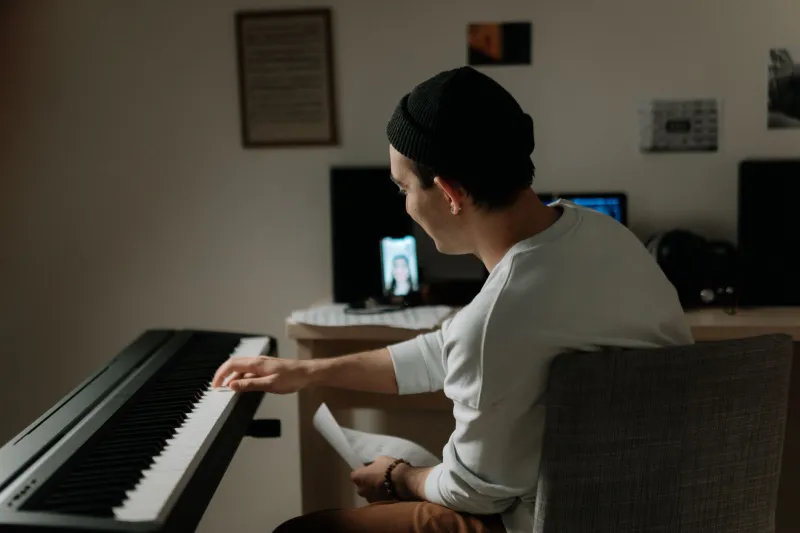
Here's a scenario that would have sounded like science fiction fifteen years ago: a producer in Seattle sends a rough instrumental to a DJ in Nagano, Japan, at 11 p.m. on a Tuesday. By the time the producer wakes up Wednesday morning, there's a voice memo in his inbox — a DJ's commentary recorded between broadcast segments, offering a take on the track that reframes the whole thing. By Friday, there's a collaboration in progress that neither party could have imagined initiating through any traditional channel.
This is happening. Not as a novelty. Not as a one-off. With increasing frequency, American musicians are finding creative partners not in the studios of Los Angeles or New York, but in the broadcast booths of FM Nagano — a regional radio station in Japan's alpine interior that has somehow become one of the most fertile ground for international musical exchange in the streaming era.
The Infrastructure of Accidental Partnership
To understand how these collaborations form, you have to understand what FM Nagano's DJs actually do — and how their work travels.
FM Nagano's on-air talent has always had a reputation for curatorial depth. These aren't personality-driven shock jocks or format-clock automatons. They're music people — often deeply knowledgeable about production, genre history, and the kind of granular sonic detail that resonates with working musicians. When their commentary and session recordings started circulating on social platforms, they reached an audience that was predisposed to hear them as peers rather than just broadcasters.
American producers and artists who discovered FM Nagano through its music programming often found themselves following individual DJs on social media, engaging with their posts, and eventually reaching out directly. The initial contact was usually fan-adjacent — expressing appreciation, asking about a track that had been played. But music people have a way of finding their way to collaboration, and the conversations that started as appreciation notes sometimes evolved into something more.
"I basically slid into a DM to ask about a Japanese ambient artist I'd heard on the station," recalls Jordan, a 29-year-old producer based in Atlanta. "We ended up talking for like three hours across two days — obviously not in real time, because of the time difference — and by the end of it we were talking about working on something together. It felt completely natural, which is wild when I think about it now."
The Time Zone Problem (That Isn't Really a Problem)
The 14-hour time difference between the US East Coast and Japan is the first thing anyone mentions when discussing these partnerships, and it's worth examining why it turns out to be less of an obstacle than you'd expect.
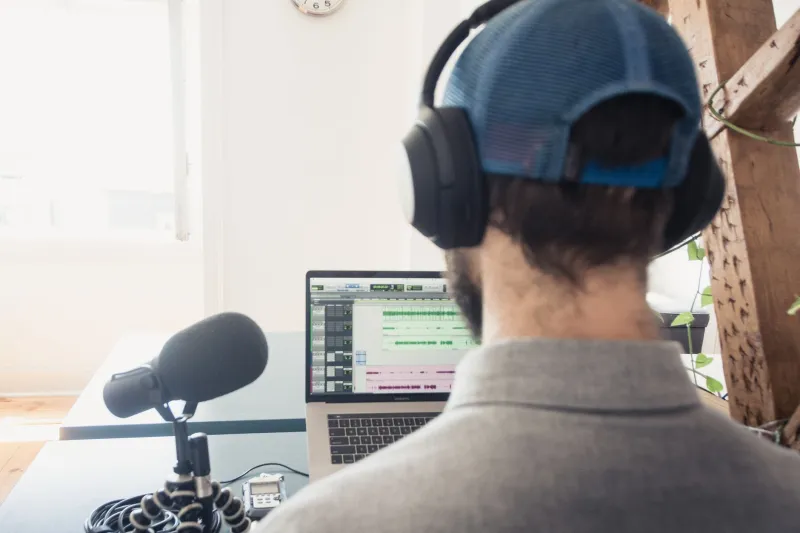
Synchronous communication — video calls, live sessions, real-time feedback — is genuinely difficult across that gap. There's a narrow window in the early morning US time / late evening Japan time that makes live conversation possible, and it requires scheduling discipline from both parties. But the nature of music production, particularly in the streaming era, is already heavily asynchronous. Producers share stems. Artists record vocals at home. Mixing happens in isolation. The collaborative workflow that the pandemic normalized across the industry is, structurally, already built for partners who aren't in the same room.
What the time difference actually creates, several collaborators note, is a productive rhythm of exchange. You send something, you sleep, you wake up to a response. The forced pause between creative moves builds in reflection time that in-person collaboration often lacks. You can't impulsively undo what you sent — you have to sit with it, which often means you sit with the other person's response more thoughtfully, too.
"There's something about the time gap that makes you more intentional," says Mia, a singer-songwriter from Austin who has been working remotely with an FM Nagano DJ on a project blending country-inflected Americana with Japanese folk elements. "You think more carefully about what you're sending because you know you won't be there to explain it in real time. It's actually made me a better communicator about my music."
Language as Creative Constraint
The language barrier is the other obvious friction point, and here too the reality is more nuanced than the obstacle framing suggests.
Many of FM Nagano's DJs have functional English, particularly in written form — enough to communicate about music with reasonable specificity. But the communication is rarely purely linguistic. Music itself is a shared language, and when collaborators are working from stems, samples, and audio files, a lot of the most important creative information travels in the sound itself rather than in words about the sound.
Where the language difference does create friction, collaborators have found creative workarounds. Voice memos with hummed melodies. Reference tracks with time-stamped annotations. Emoji-heavy messages that somehow convey aesthetic direction with surprising accuracy. One producer described sending a short video of himself walking through his neighborhood in the rain as a mood reference for a track — no words, just vibes — and receiving back a piano phrase that captured exactly what he was going for.
"When you can't rely on words to explain what you want, you get better at showing it," he said. "That's actually a skill that transfers to all my collaborations now, not just the Japan ones."
What the Output Actually Sounds Like
The music emerging from these partnerships is genuinely difficult to categorize, which is probably part of the point. It tends to resist easy genre placement — not J-pop, not American indie, not some calculated fusion of the two, but something that sounds like two distinct sensibilities finding unexpected common ground.
The FM Nagano influence tends to show up in texture and atmosphere — the station's long-standing aesthetic of space, patience, and environmental awareness seeping into productions that might otherwise have been more dense or urgency-driven. American collaborators bring structural instincts, lyrical directness, and production energy that gives the music momentum without erasing its contemplative quality.
The results are finding audiences in unexpected places — not just among FM Nagano's existing fanbase or the American artists' existing followers, but among listeners who seem to recognize something new in the synthesis.
The Blueprint Going Forward
What FM Nagano's collaborative ecosystem reveals is something the music industry has been slowly learning: that geography is no longer the primary determinant of creative partnership. What matters is shared sensibility, mutual respect, and the willingness to work within constraints that turn out to be generative rather than limiting.
The time difference. The language gap. The physical distance. These are real. But they're also, for the right collaborators, just parameters — the kind of creative constraints that musicians have always found ways to make into features rather than bugs.
FM Nagano didn't set out to become an international collaboration hub. It set out to make great radio for the people of Nagano Prefecture. The fact that it ended up doing both is, in its own way, the most FM Nagano thing imaginable.