Borrowed From the Alps: How US Podcast Producers Are Raiding FM Nagano's Playbook
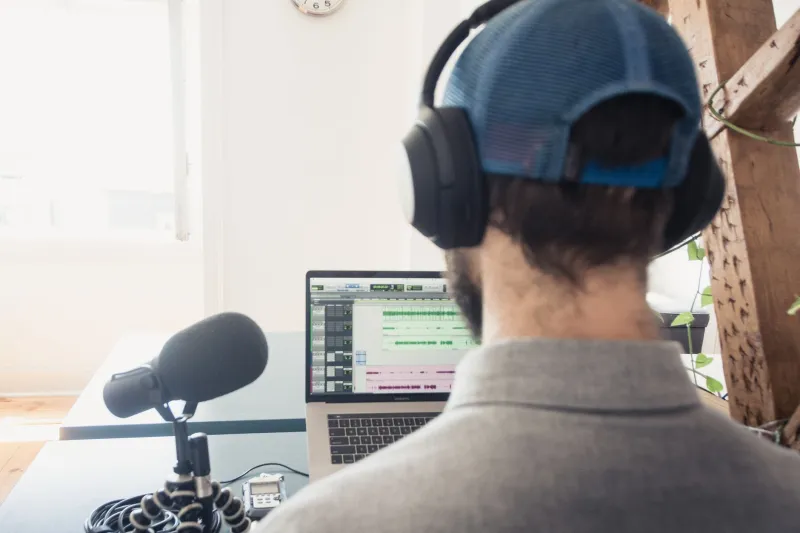
Somewhere between a crackling fire sound effect and a perfectly timed pause in conversation, American podcast producers started asking the same question: where is this coming from? For a growing number of them, the answer traces back to a radio station broadcasting from the Japanese Alps.
FM Nagano has always had its loyalists — local listeners, expat music fans, and the occasional adventurous streamer in the US who stumbled across it while researching a Japan trip. But lately, the station has been picking up a very specific kind of admirer: audio engineers, narrative podcast hosts, and independent producers who are studying its broadcasts the way film students study Kubrick.
The Sound That Stopped People Mid-Scroll
For Seattle-based podcast producer Dana Merritt, the discovery happened almost by accident. She was building an ambient playlist for a late-night editing session when a friend dropped an FM Nagano stream into their shared queue.
"I didn't even know what station it was at first," she says. "I just noticed that the transitions between music and talk felt different — like there was actual breathing room. Nobody was rushing to fill silence. And the way they layered environmental sound under interviews? I'd never heard anything quite like it outside of like, high-budget BBC documentary work."
Merritt produces Slow Frequency, a podcast about independent music scenes across the Pacific Northwest, and she says the FM Nagano influence started showing up in her editing almost immediately. She began pulling back on her compression settings, letting room tone sit longer at the top of interviews, and rethinking how she used ambient sound as a storytelling tool rather than just a filler.
"My listener retention numbers went up like three weeks after I started making those changes," she says. "I don't want to say it's all because of FM Nagano, but the timing is hard to ignore."
Atmosphere as Architecture
What is it about FM Nagano's broadcast style that keeps pulling in outside listeners? Part of it comes down to something producers describe as "intentional texture" — the station's tendency to let the sonic environment of Nagano itself become part of the broadcast rather than something to be edited out.
Where a lot of American radio (and by extension, American podcasting) treats silence and ambient noise as problems to be solved, FM Nagano seems to treat them as ingredients. Wind, the low hum of a mountain town, the particular reverb of a small studio — these elements aren't scrubbed clean. They're left in, sometimes even emphasized.
For Brooklyn-based audio engineer Marcus Tello, that approach was a revelation. Tello works with several indie podcast labels and has spent the last two years incorporating what he calls "spatial honesty" into his mixing philosophy.
"American audio production has this obsession with cleanliness," he explains. "Everything gets noise-reduced to death. And then you wonder why the interview sounds weirdly sterile, why listeners feel like they're watching a screen instead of being in a room with someone. FM Nagano doesn't do that. You can feel where they are."
Tello has started recommending FM Nagano broadcasts to new clients as reference listening — not as a template to copy, but as a way to recalibrate their ears before they start production.
The Interview Pacing Thing
Beyond sound design, there's another element that keeps coming up when US producers talk about FM Nagano: the way hosts conduct interviews.
American podcast culture has a rhythm to it — quick questions, fast follow-ups, a general anxiety about dead air that sometimes turns conversations into verbal ping-pong matches. FM Nagano's interview style, at least as experienced through translated clips and international streams, operates on a different clock.
Hosts let answers land. They pause before responding. They ask follow-up questions that suggest they actually listened to what was just said, rather than just waiting for their turn to talk. For listeners — and producers — used to the American pace, it can feel almost disorienting at first. Then it starts to feel like relief.
"I started timing my own host responses after I noticed the Nagano thing," says Chicago-based podcast host Jess Okafor, who runs a music culture show called Frequency Check. "I was jumping in way too fast. I wasn't giving my guests room to add anything. Now I count to two in my head before I respond, every time. Sounds small, but the quality of my conversations changed completely."
Sonic Branding, Mountain Style
One more area where FM Nagano has been catching the attention of US audio professionals: sonic branding. The station has a remarkably consistent identity across its broadcasts — a kind of tonal coherence that makes it immediately recognizable even to listeners who don't speak Japanese.
That consistency, producers say, is something a lot of American podcasts struggle to achieve. Many shows cycle through different intro music, change their mixing style between seasons, or let their sonic identity drift as the show evolves. FM Nagano, by contrast, feels like it always knows exactly what it sounds like.
"Sonic branding is huge in advertising, but podcasters often treat it as an afterthought," says Merritt. "FM Nagano is a masterclass in having a sound and sticking to it. Every time I tune in, I know where I am within about ten seconds. That's incredibly powerful."
Finding the Signal
None of this means American podcasters are trying to recreate FM Nagano or pretend to be something they're not. The producers who've drawn inspiration from the station are quick to point out that they're borrowing principles, not aesthetics — taking the underlying logic of patient pacing, spatial audio, and tonal consistency and applying it to their own very American shows.
But the fact that a regional Japanese radio station is becoming reference material for US podcast production says something interesting about where audio storytelling is heading. In a landscape crowded with shows competing for attention through volume and velocity, FM Nagano offers a counterargument: slow down, let the room breathe, trust your listener.
For a growing number of producers, that argument is landing loud and clear — even from thousands of miles away, broadcast from a mountain town most of their listeners have never visited.
If you haven't streamed FM Nagano yet, it might be worth a listen — not just as a music fan, but as someone who cares about what audio can do when it's given a little more room to exist.