From the Airwaves to the Main Stage: How FM Nagano's DJs Became the World's Most Wanted Festival Acts
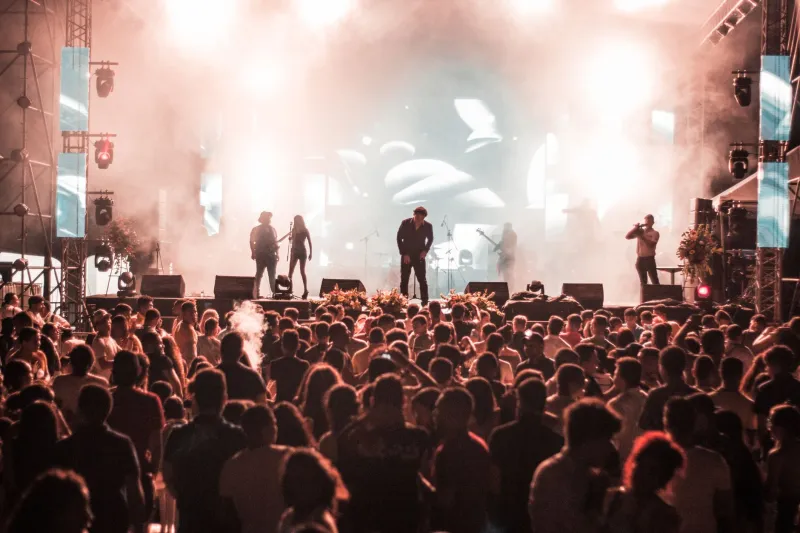
If you'd told someone five years ago that a regional Japanese radio station would be sending its DJs to headline sets at festivals in Amsterdam, Austin, and Singapore, the reaction would've been polite skepticism at best. But here we are. FM Nagano's on-air talent — the same voices that have been spinning records and curating culture for listeners across the Nagano prefecture for decades — are now showing up on festival lineups that used to be reserved for household names and streaming algorithm darlings.
So how exactly did this happen? And what does it say about where the global music industry is actually headed?
The Reputation Built Slowly, Then All at Once
Anyone who's been following FM Nagano for a while knows the station has never been flashy about what it does. There's no aggressive social media push, no manufactured hype cycle. The DJs who've built careers there — people like the legendary late-night selector known to fans as Kaz-Alpine or the boundary-blurring multi-genre programmer Yuki Shiraishi — earned their reputations the old-fashioned way: through years of genuinely excellent taste and an almost academic dedication to the craft of sequencing music.
That reputation started leaking outside Japan's borders through a pretty organic pipeline. Music journalists and indie label scouts who'd been tuning in remotely started talking. Streaming-era listeners who stumbled onto recorded broadcasts shared clips. And somewhere in that word-of-mouth chain, festival bookers started paying attention.
"What struck me first was the depth," says Marco Delgado, programming director for a mid-sized electronic music festival in Barcelona that booked an FM Nagano DJ for a 2023 afternoon slot. "Most festival DJs, even great ones, have a lane. These guys don't have a lane — they have a whole mountain range. The set we got was unlike anything else on our lineup that year, and our audience felt it immediately."
Radio Training as a Secret Weapon
Here's something the festival world is slowly waking up to: radio DJs, particularly those trained in the demanding format of live broadcast programming, possess skills that club and festival DJs often don't develop in the same way. When you're on air, you're reading an invisible audience. You can't see the crowd, you can't feel the energy in the room — you have to anticipate, adapt, and make decisions in real time based on nothing but instinct and experience.
For FM Nagano's DJs, that training happened across years of live radio, often in formats that required them to shift moods dramatically within a single show — from introspective ambient pieces to uptempo city-pop throwbacks to brand-new experimental tracks, sometimes within the span of an hour. That kind of tonal flexibility is extraordinarily difficult to fake in a festival setting, where a performer has to hold a crowd through weather changes, sound issues, and the general chaos of outdoor events.
Shiraishi, who headlined a set at a Pacific Northwest festival last summer, talked about the connection between her radio background and her live performances in a pre-show interview. "Radio taught me that every transition is a conversation," she said. "You're always asking the listener — or in a live setting, the crowd — where they want to go next. I don't impose a direction. I suggest one and see if they follow."
They followed. Accounts from attendees described her set as one of those rare festival moments where time feels genuinely elastic — the kind of two-hour block that somehow feels like twenty minutes.
Cultural Ambassadors, Not Just Entertainers
What separates the FM Nagano phenomenon from a standard "regional talent goes global" story is the cultural dimension that these DJs carry with them. They're not just playing music — they're bringing an entire sonic geography with them. The Nagano region's cultural identity, shaped by its alpine landscape, its history as an Olympic host city, its deep roots in traditional Japanese folk music alongside a surprisingly robust indie and jazz scene, all of that comes through in how FM Nagano's talent approaches a set.
Festival organizers have started recognizing this explicitly. Several have positioned FM Nagano bookings not just as entertainment slots but as genuine cultural programming — the kind of experience that gives a festival a sense of international substance beyond just importing the same rotating cast of European techno acts.
"We wanted our audience to feel like they'd traveled somewhere," says Priya Nair, a festival curator based in Chicago who's been actively pursuing FM Nagano talent for an upcoming summer event. "There's a real appetite right now for experiences that feel rooted in a specific place and culture, not just globally generic. FM Nagano's DJs deliver that in a way that's also completely accessible — you don't need any background knowledge to feel it."
A Broader Shift in How We Value Radio
The FM Nagano story is also landing at a moment when the broader music world is having a genuine reckoning with what radio — real, curated, personality-driven radio — actually contributes to culture. After years of being written off as a legacy medium, radio is experiencing a critical rehabilitation. Podcasts helped, but so did a growing fatigue with algorithmic playlists that, for all their convenience, often feel like they're optimizing for familiarity rather than discovery.
In that context, FM Nagano's DJs represent something that a lot of music fans are hungry for: human curation with genuine stakes, built over years of real expertise. When one of these DJs walks out onto a festival stage, they're carrying that credibility with them — and audiences can feel the difference.
For American fans who've been streaming FM Nagano's broadcasts from across the Pacific, seeing the station's talent on a lineup at a domestic festival carries a particular kind of thrill. It's the validation of something they've been quietly championing in music forums and group chats, finally breaking into the mainstream conversation.
What Comes Next
Bookings for FM Nagano-affiliated DJs are reportedly up significantly heading into the next festival season, with confirmed appearances at events in the UK, Australia, and multiple US cities in the works. Whether the station can maintain the intimate, community-rooted identity that made its talent so compelling in the first place — while its DJs increasingly become international figures — is the interesting tension to watch.
But if the station's history is any guide, FM Nagano has always been pretty good at doing things its own way, on its own terms. The mountain air, it seems, produces a particular kind of stubbornness that translates surprisingly well on a main stage.