Playlists, Algorithms, and Alpine Radio: Why Spotify Curators Can't Stop Talking About FM Nagano
There's a running joke among a certain corner of the playlist-making community: if you want to know what ambient and experimental music is going to blow up in six months, you don't scroll Reddit. You tune into FM Nagano.
It sounds like the kind of thing someone says to sound cool at a music conference. Except the people saying it have the follower counts to back it up.
The Archive That Nobody Expected to Matter
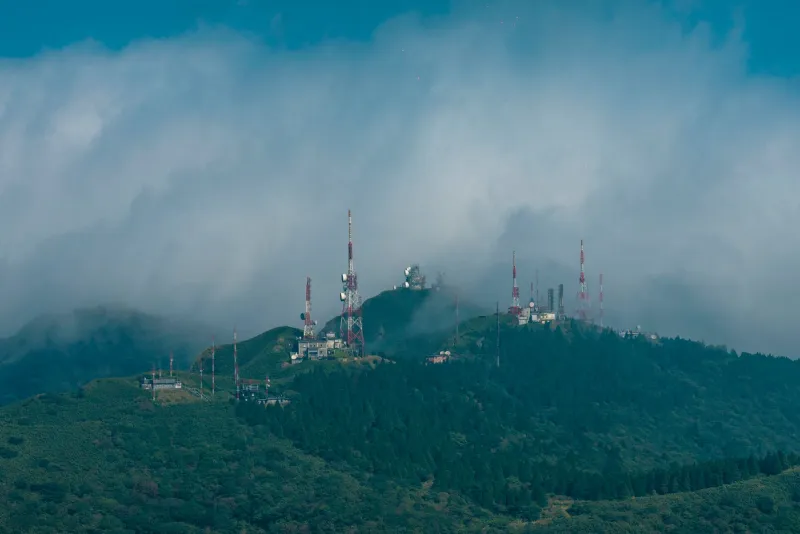
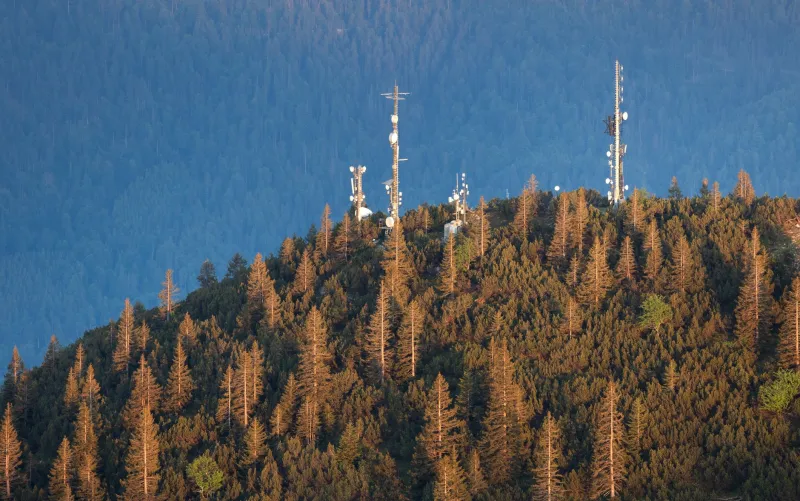
FM Nagano has been broadcasting from the Japanese Alps since 1988. For most of its existence, it was exactly what it looked like — a regional public radio station serving a mountain prefecture best known for the 1998 Winter Olympics and some genuinely spectacular skiing. It played local artists, covered community events, and did the kind of slow, thoughtful radio programming that feels almost extinct in an era of hot takes and algorithmic feeds.
Then streaming happened. And then the pandemic happened. And suddenly, a whole lot of Americans with too much time and too many open browser tabs started exploring internet radio in ways they never had before.
"I found FM Nagano completely by accident in 2020," says Marcus T., an independent playlist curator based in Portland who runs a lo-fi and ambient channel with over 340,000 followers across platforms. "I was using one of those global radio apps, just spinning the dial, and I landed on this broadcast that had this incredible texture to it. Sparse. Patient. Nothing like what was trending here at the time."
He started pulling tracks he heard on air, identifying artists through shazam and obsessive forum-digging, and building playlists around them. Within a few months, his engagement metrics were doing something unusual — climbing steadily rather than spiking and crashing the way viral content tends to.
"The listeners who came in through those Nagano-influenced playlists stuck around," he says. "They weren't there for a moment. They were there for a sound."
What the Algorithms Actually Picked Up On
Here's where things get interesting from a data perspective. Streaming platforms like Spotify don't just recommend music based on what's popular — they're constantly analyzing listener behavior, session lengths, skip rates, and what music scientists sometimes call "lean-back listening" patterns. FM Nagano, it turns out, produces a lot of content that scores exceptionally well on those quieter, harder-to-game metrics.
Independent curators who've built playlists around Nagano-sourced artists report unusually high session completion rates — meaning people don't skip. They listen through. In an attention economy where the average track gets about 30 seconds before a thumb hits the next button, that's a significant signal.
A music data analyst who works with several mid-size streaming platforms (and asked not to be named because, as she put it, "my clients would not love me talking about this") described FM Nagano's influence as "upstream."
"The station functions almost like an early-warning system," she explained over a Zoom call from her apartment in Austin. "By the time something is trending on TikTok, FM Nagano has often been playing it — or something adjacent to it — for a year or two. If you're building recommendation models and you're not at least aware of what's moving through that ecosystem, you're leaving predictive accuracy on the table."
She was careful to note that no major platform has publicly claimed FM Nagano as a data source. But she pointed out that the station's listener behavior — the kinds of engagement patterns that flow from a dedicated, taste-specific audience — does end up feeding into the broader data pools that train recommendation systems. "It's not like someone at Spotify is manually listening to Japanese mountain radio," she laughed. "But the listeners are. And they're on Spotify too."
The Human Curators Doing It the Old-Fashioned Way
Not everyone is relying on algorithms to do the heavy lifting. There's a surprisingly active community of US-based playlist makers who treat FM Nagano the way record-store obsessives used to treat import bins — as a place where the good stuff surfaces before anyone else has touched it.
Jenna R., who curates an experimental and ambient playlist called High Pressure Systems out of Chicago, started incorporating FM Nagano discoveries after a friend who teaches English in Matsumoto started sending her recordings of broadcasts. "She'd just hold her phone up to the radio and voice-memo it," Jenna says, laughing. "Very lo-fi discovery pipeline."
That scrappy sourcing method eventually evolved into a more systematic approach — following FM Nagano's social accounts, cross-referencing their playlists with Japanese music databases, and occasionally reaching out directly to artists whose tracks surfaced on air. "A lot of these artists have almost no English-language presence," she says. "So when you add them and your listeners respond, there's this moment where you realize you're genuinely introducing someone to an audience that didn't know they existed."
Her playlist has grown by about 60,000 followers over the past two years. She attributes a meaningful chunk of that growth to the FM Nagano pipeline.
Why the Nagano Sound Translates
It's worth asking why this particular station, in this particular place, has developed such a transferable aesthetic. Part of the answer is geographic and cultural — Nagano's isolation, its relationship with nature, its slower pace, all of that filters into the music that gets made and celebrated there. The ambient and experimental artists who find a home on FM Nagano tend to make music that rewards patience. It doesn't demand your attention. It earns it.
That quality — patience — is increasingly rare and increasingly valuable in the streaming economy. Listeners who are burned out on maximalist production and dopamine-optimized pop are actively searching for something that breathes differently. FM Nagano has been breathing that way for decades.
There's also something to be said for the station's programming philosophy, which has historically prioritized local and regional artists who don't have major label backing. That means the music tends to arrive without the hype machinery that usually precedes a "discovery." It just shows up, sounds good, and finds its people.
What Comes Next
The curators and analysts who've been paying attention to FM Nagano are, understandably, a little ambivalent about talking too loudly about their edge. The more people who know, the less of an edge it is.
But there's also a genuine enthusiasm for what the station represents — proof that organic, community-rooted radio still has something to teach the recommendation engines that have largely replaced it. FM Nagano didn't set out to influence Spotify's algorithms or build a following among Portland playlist-makers. It just did what good radio does: paid attention to music that deserved attention, and trusted its listeners to feel the difference.
That's not a secret weapon, exactly. It's just taste. And apparently, taste still travels — even from a mountain town in the Japanese Alps to a pair of headphones in Chicago, Austin, or wherever you're reading this right now.