The Station Nobody Expected: How FM Nagano Quietly Became Required Listening for US Indie Label Scouts

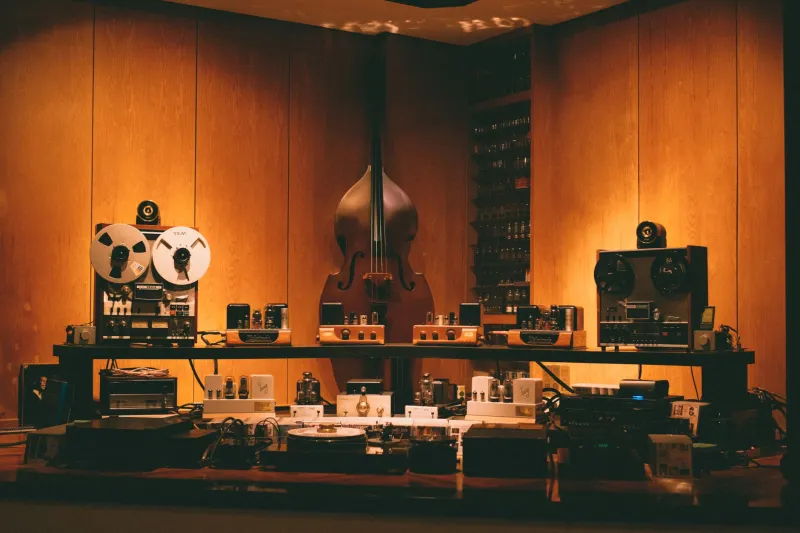
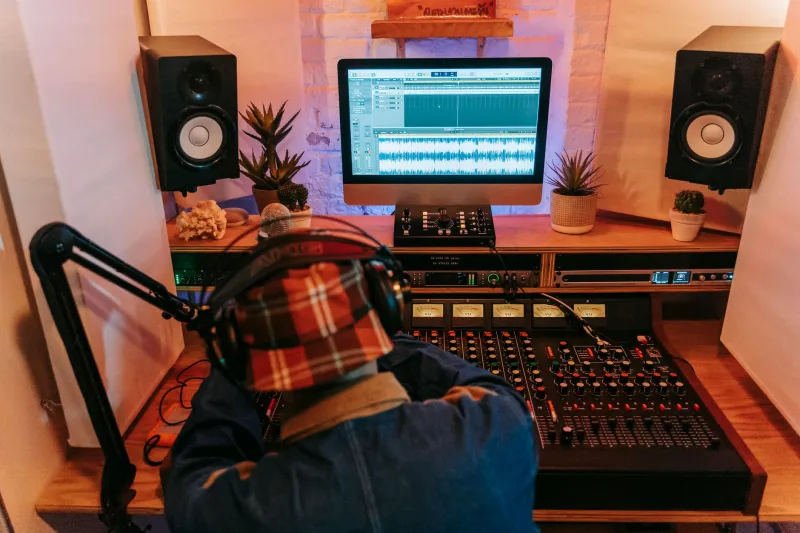
Photo by Photo by Cody Manning on Unsplash on Unsplash
In the music industry, tastemakers are supposed to be obvious. They're supposed to have blue checkmarks and Pitchfork bylines and guest spots on NPR. They're not supposed to be a regional radio station broadcasting from a landlocked Japanese prefecture surrounded by ski slopes.
And yet, here we are.
FM Nagano — the station that US music fans have been quietly adopting as their go-to discovery source for the better part of the last few years — has started showing up in a context that nobody quite predicted: the internal conversations of American independent record labels.
How It Started: Patterns That Couldn't Be Ignored
The story, as best as anyone can reconstruct it, begins with a handful of coincidences that eventually stopped looking like coincidences.
Several indie label owners and A&R professionals, working independently of each other, noticed something odd. Artists they were tracking — small-scale acts with modest streaming numbers and no major press — were suddenly seeing spikes in engagement. Playlist adds. Follower growth. A bump in saves on Spotify. When they dug into the geography of where this activity was originating, Japan kept appearing near the top. And when they looked more closely at what was driving Japanese listener interest, FM Nagano's name came up repeatedly.
"We had an artist on our roster who was getting maybe 200 monthly listeners in Japan," recalls Jordan Taft, co-founder of a Brooklyn-based indie label that focuses on lo-fi and bedroom pop. "Then over about six weeks, that number went to almost 4,000. We couldn't figure it out. One of our interns was the one who eventually tracked it to FM Nagano playing the track a few times. That was our introduction to what this station could do."
Taft's label now has someone monitoring FM Nagano's programming on a semi-regular basis. It's not a formal process — more of a gut-check, a way of validating what the data is already suggesting. But it's become a real part of how they operate.
What Makes FM Nagano's Curation So Trustworthy?
The obvious question is: why this station? Japan has hundreds of radio stations. What makes FM Nagano's programming decisions signal anything meaningful to the US indie market?
Part of the answer is selectivity. FM Nagano doesn't chase trends in the way that commercial radio does. Its programming has a distinct character — a preference for texture and atmosphere over immediacy, for artists who have something specific to say sonically rather than artists who are simply well-positioned commercially. That curatorial identity has built real trust with its audience, and that trust is what makes a spin on FM Nagano mean something.
"It's the difference between a playlist that's algorithmically generated and a record store employee recommendation," says Priya Nair, an A&R consultant who works with several independent labels across the Pacific Northwest. "When a human being with taste and context puts something in front of an audience that trusts them, the engagement is qualitatively different. FM Nagano has built that relationship with its listeners."
Nair has started including FM Nagano rotation data in the artist briefs she prepares for label clients. "It's not a definitive signal by itself," she's careful to note. "But it's a meaningful one. If an artist is getting attention from that station, I want to know why."
The Artists Who've Felt the Ripple
For artists themselves, getting played on FM Nagano can feel a little surreal — especially when they're based in places like Asheville, North Carolina, or Minneapolis, and have no particular connection to Japan or its music scene.
Callie Drummond, a singer-songwriter from Tucson who records under the name Pale Meridian, found out FM Nagano had been playing her music through a fan message. "Someone sent me a screenshot of a tweet that mentioned my name and FM Nagano in the same sentence," she says. "I didn't even know how to process it. I'd never thought about that station before."
In the months following FM Nagano's rotation of her single, Drummond saw her Bandcamp traffic spike noticeably, with a significant portion of the new visitors coming from Japan. Two independent labels reached out to her within the same quarter — both citing her growing international profile as part of their interest. She signed with one of them earlier this year.
"I'm not saying FM Nagano made my career," Drummond says. "But I do think it opened a door that I didn't know existed."
The Broader Streaming Effect
Beyond individual artist stories, there's a more systemic pattern emerging. Streaming platforms' recommendation algorithms are sensitive to engagement signals from diverse geographic markets, and a meaningful uptick in Japanese listener activity — the kind that FM Nagano can generate — can influence how an algorithm weights an artist's profile globally.
In practical terms, this means that FM Nagano's programming decisions can have downstream effects that extend well beyond Japan. An artist who gets traction on the station might find themselves appearing in Spotify's Discover Weekly queues for listeners in Germany, Brazil, or the American Midwest — all because an algorithm detected genuine cross-cultural engagement and decided the artist was worth surfacing more broadly.
This is the mechanism that A&R professionals are increasingly paying attention to. "We're not just watching FM Nagano because Japanese listeners matter," explains Taft. "We're watching it because it can trigger a chain reaction across platforms. It's become a lever in a system that most people don't even realize exists."
A Tastemaker That Didn't Ask for the Job
What's genuinely interesting about all of this is that FM Nagano hasn't positioned itself as a global tastemaker. It's a regional station doing regional radio, serving a community in the Japanese Alps with programming that reflects local sensibilities and interests. The international influence is entirely a byproduct of the internet making its signal accessible and an audience finding its way to something that felt authentic.
That authenticity is probably the whole point. In an era where every playlist, every recommendation engine, and every streaming surface is optimized for engagement metrics, a station that's just doing its thing — playing what it believes in, building a real relationship with its listeners, operating without a growth strategy — stands out in ways that are hard to manufacture.
For US indie labels trying to find artists who matter before everyone else does, FM Nagano has become something genuinely rare: a signal they can trust precisely because it wasn't designed to be one.
Tune in. You might find your next favorite artist before your A&R team does.