Headphones and Snowfall: Meet the Bedroom Producers Putting Nagano on the Streaming Map
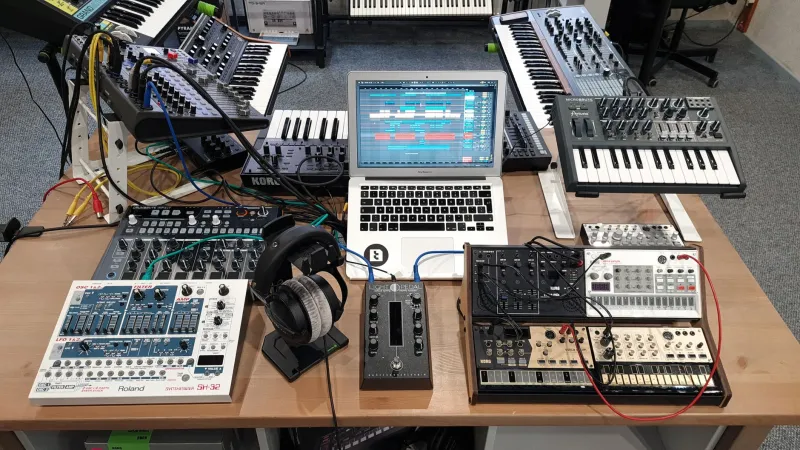
There's a certain image that comes to mind when people talk about the bedroom producer movement — a teenager in a cramped apartment, city lights bleeding through the window, making beats until 3 a.m. It's a very urban picture. And for a long time, that's mostly where the story was told: Tokyo, Seoul, Los Angeles, London.
But something quieter has been happening in Nagano, and it's worth paying attention to. Tucked into the Japanese Alps, far from the cultural machinery of the major cities, a loose community of producers is building real careers — real streaming numbers, real international followings — from setups that would look familiar to any bedroom producer in the US. Except outside their windows, there are mountains instead of streetlights.
The Landscape as a Collaborator
Talk to almost any Nagano-based producer about their process and the environment comes up almost immediately. It's not just a backdrop — it functions more like a collaborator. The particular quality of silence in a mountain town after snowfall, the way sound behaves differently in cold dry air, the rhythms of seasonal change that are far more pronounced than anything you'd notice in a city — all of it bleeds into the music.
One producer who's been releasing lo-fi and ambient work under a Japanese-language alias for the past few years described it this way: the isolation isn't something to overcome, it's something to use. When you're not surrounded by the constant audio input of a dense urban environment, you start noticing the textures in quiet. That noticing shows up in the music.
This isn't a new idea — plenty of artists across history have talked about how rural environments shape their work. But there's something specific happening in Nagano right now that goes beyond individual artistic philosophy. It's starting to look like a genuine scene.
FM Nagano as an Unlikely Influence
For producers who grew up in the region, FM Nagano was often the primary window into music beyond their immediate surroundings. The station's mix of local programming and broader Japanese pop, rock, and electronic content meant that a kid in a mountain town had a curated soundtrack running in the background of their formative years — different from what their peers in Tokyo were absorbing, but no less formative.
Several producers in the current wave cite specific FM Nagano programs or moments as early touchstones. There's something interesting about a generation of digital-native artists who trace a meaningful part of their musical education back to a terrestrial radio station — it's a reminder that broadcast media shaped taste in ways that still echo even as the platforms have completely changed.
The station's continued presence as a community connector also matters for the scene in practical ways. Local artists get shoutouts, events get announced, and the sense that there's an audience paying attention to Nagano-based music — not just music made in the major cities — gives producers a reason to identify openly with where they're from rather than obscuring it.
Building an Audience Without Leaving Home
For US-based music fans, the mechanics of what these producers are doing will feel very familiar. Spotify, SoundCloud, Bandcamp, YouTube, TikTok — the toolkit is the same one independent artists everywhere are using. What's different is the context and, increasingly, the aesthetic.
Nagano producers have developed a recognizable sonic identity that's been picking up listeners internationally, particularly in the lo-fi and ambient spaces where geography and mood translate across language barriers pretty effectively. Tracks that sample the sound of wind through alpine forests, or build their rhythm around the kind of slow, deliberate pace of mountain town life, are finding audiences in the US and Europe who may have no idea where Nagano is but respond to the atmosphere immediately.
That's the interesting flip side of the bedroom producer story: the very isolation that might seem like a disadvantage becomes a differentiator. There are a lot of lo-fi producers. There aren't that many making music that sounds unmistakably like it came from the Japanese Alps.
The Collaboration Question
One thing that comes up when you dig into this scene is how producers are navigating the collaboration challenge. Working with other musicians is harder when you're not in a dense urban area where you can easily meet up with a vocalist or a live instrumentalist. But the pandemic-era normalization of remote collaboration has helped significantly, and Nagano producers have been creative about building working relationships across distance.
Some have developed ongoing partnerships with artists in Tokyo or Osaka who provide live elements — guitar, vocals, field recordings — that get woven into tracks remotely. Others have leaned into the solo producer model fully, treating the limitation as a creative constraint that keeps their sound focused and personal.
A few have started gathering in person for small sessions in the region, which has helped build the sense of a local scene rather than just a collection of isolated individuals. Those sessions have a different energy than a city studio — more relaxed, more exploratory, and often more productive for exactly those reasons.
What's Next for the Mountain Sound
It's genuinely hard to predict where this goes. Scenes that develop organically in smaller markets can stay small and sustainable, or they can break through in ways that change the dynamic entirely. A few Nagano producers have already crossed into broader visibility — playlist placements on major streaming platforms, coverage on music blogs that reach international audiences — and that tends to pull more attention toward the broader ecosystem.
What's worth rooting for is a version of growth that keeps the scene's character intact. The reason Nagano's bedroom producer movement is interesting isn't just the music — it's the proof of concept that meaningful, original work can come from anywhere, that geography isn't destiny in the streaming era, and that sometimes the best thing you can do for your creative voice is stay exactly where you are.