From the Japanese Alps to Your Playlist: How Nagano's Sound Is Reshaping American Songwriting
There's a moment that a lot of American musicians describe when they first really hear something from Nagano. It's not a dramatic revelation — it sneaks up on you. Maybe it's a late-night FM Nagano stream playing in the background while you're working on a track, or a playlist recommendation that leads you down a rabbit hole of artists you've never encountered before. Whatever the entry point, the feeling tends to be the same: where has this been all my life?
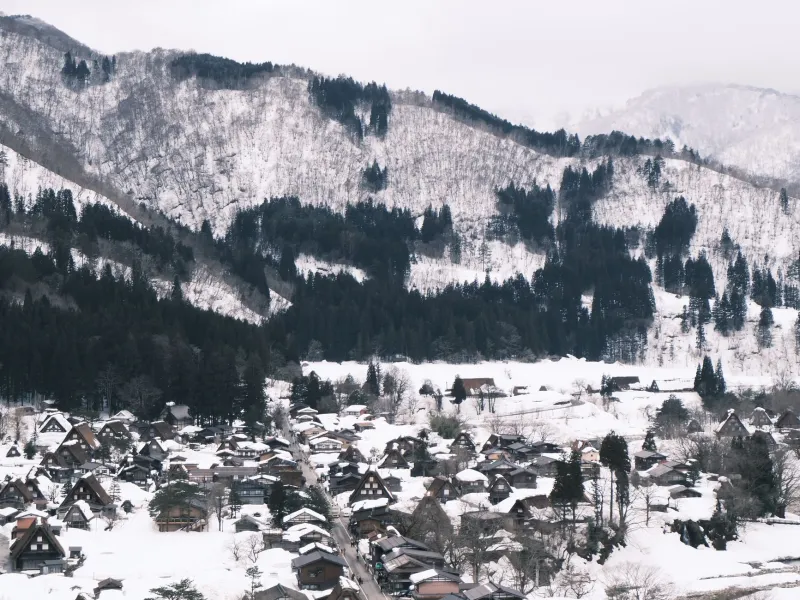
Nagano Prefecture, tucked deep in the Japanese Alps, has long been known stateside for its Olympic legacy and its world-class ski slopes. But among a growing pocket of American indie artists, producers, and songwriters, it's becoming known for something else entirely — a musical identity so distinct and fully realized that people are starting to call it "the Nagano sound," even if nobody can quite agree on what that means.
Isolation as a Creative Ingredient
To understand why Nagano makes the music it does, you have to understand where it sits — literally. Surrounded by mountain ranges on nearly every side, it's a place that has always had to develop its own cultural vocabulary. There's no major metropolitan center pulling artistic gravity the way Tokyo or Osaka do. That geographic remove, rather than limiting creativity, seems to have supercharged it.
"When I started digging into music coming out of the region, I kept noticing this quality I couldn't name at first," says Dara Fielding, a Nashville-based songwriter who spent three weeks in Nagano in 2022 after a friend forwarded her a few tracks she'd heard through an FM Nagano broadcast. "Everything felt considered. Unhurried. Like the artists had time to let ideas breathe instead of rushing toward a hook."
That sense of space — sonic and temporal — is something a lot of American listeners point to. In an era where streaming algorithms reward immediate gratification and songs are routinely engineered to grab you in the first three seconds, music from Nagano's scene operates on a different clock. Tracks unfold. Textures layer slowly. Silences get treated as compositional elements rather than gaps to fill.
Where Tradition Meets the Experimental
What really sets the Nagano sound apart from other regional Japanese scenes is how it handles tradition. The area has deep roots in folk music — instruments like the shamisen and shakuhachi aren't museum pieces here, they're living tools that working musicians engage with regularly. But the artists coming out of Nagano aren't content to simply preserve those sounds. They're in active conversation with them.
You'll hear it in the way a bedroom producer might layer a processed koto sample under a four-on-the-floor beat, or how a singer-songwriter incorporates the microtonal nuances of traditional Japanese vocal styles into otherwise Western-structured indie folk. It's not pastiche. It's not world music in the cheesy, tourist-trap sense. It's genuine synthesis — two musical worlds figuring out how to coexist inside a single song.
For Marcus Teel, a Brooklyn-based multi-instrumentalist who's been incorporating Nagano-influenced elements into his own work since 2021, that synthesis is the whole ballgame. "American indie music has been in a conversation with itself for a really long time," he says. "Nagano broke that loop for me. Suddenly I was hearing approaches to melody and rhythm that didn't come from the same ten reference points everyone else is drawing from."
Teel has since collaborated remotely with two Nagano-based artists he connected with through FM Nagano's online community, and he credits those exchanges with fundamentally changing how he thinks about arrangement.
The FM Nagano Effect
It would be hard to overstate how central FM Nagano has been to spreading the region's musical identity to international ears. The station has always prioritized local and regional artists, giving airtime to voices that major Japanese networks might overlook. For US fans who discovered the station through its online stream, that curatorial commitment has functioned like a guided tour through a scene they'd otherwise have no roadmap for.
"FM Nagano is basically my A&R department at this point," jokes Priya Sandhu, a Los Angeles-based songwriter and producer who grew up listening to South Asian music before falling hard into indie rock in her teens. "I'll hear something on the stream and spend the next week chasing down everything that artist has ever released. It's led me to music I genuinely don't think I would have found any other way."
Sandhu has been particularly drawn to the way Nagano artists handle emotional weight — what she describes as a kind of "restrained intensity" that she's actively trying to bring into her own writing. "There's no overselling. The feeling is there, fully, but it's not being shouted at you. That's something I'm obsessed with right now."
A Reference Point, Not a Template
One thing worth noting is that none of the American songwriters we spoke to are trying to become Nagano artists. The influence isn't about imitation — it's about expanding the frame of what's possible. The Nagano sound works as a reference point, a reminder that there are entirely different ways to approach the fundamental questions of songwriting: How long should this take? How much should be said versus implied? Where does melody end and texture begin?
Those are questions that transcend geography, which is probably why the influence travels so well. You don't have to have ever set foot in Japan — let alone the Japanese Alps — to feel the pull of music that was shaped by that particular landscape and that particular cultural moment.
Still, for those who have made the trip, there's something irreplaceable about experiencing the source directly. The light quality in Nagano. The way sound behaves in cold, thin mountain air. The specific silence of a snowfall at altitude. Artists who've been there consistently describe coming home with a changed relationship to quiet — and to the space between notes.
What Comes Next
The conversation between American songwriters and Nagano's music community is still early. Remote collaboration is happening, but it's scattered and informal. A few US indie labels have started paying closer attention to what's coming out of the region, but there's no pipeline yet, no established infrastructure for bringing these artists to wider American audiences.
That might actually be part of the appeal, at least for now. There's something genuinely exciting about a scene that hasn't been packaged and marketed yet, where discovery still feels like discovery. FM Nagano's stream is right there for anyone willing to tune in, and the community of American listeners building up around it keeps growing, one late-night session at a time.
The mountain town isn't going anywhere. And increasingly, neither are the American artists it's inspiring.