Quiet Signals, Loud Lessons: What US Radio Is Borrowing From FM Nagano's Stripped-Down Style

There's a moment in a lot of FM Nagano broadcasts where nothing much happens. A host finishes a thought, a song fades in slowly, and the transition feels almost uncomfortably unhurried. No jingle stabs. No bumper music cranked to eleven. Just... space.
For American ears conditioned to the relentless churn of commercial radio — the sweepers, the drops, the constant reminder of what station you're listening to — that silence can feel strange at first. But for a growing number of US broadcasters who've been studying FM Nagano's format, that silence is the whole point.
The Philosophy Behind the Quiet
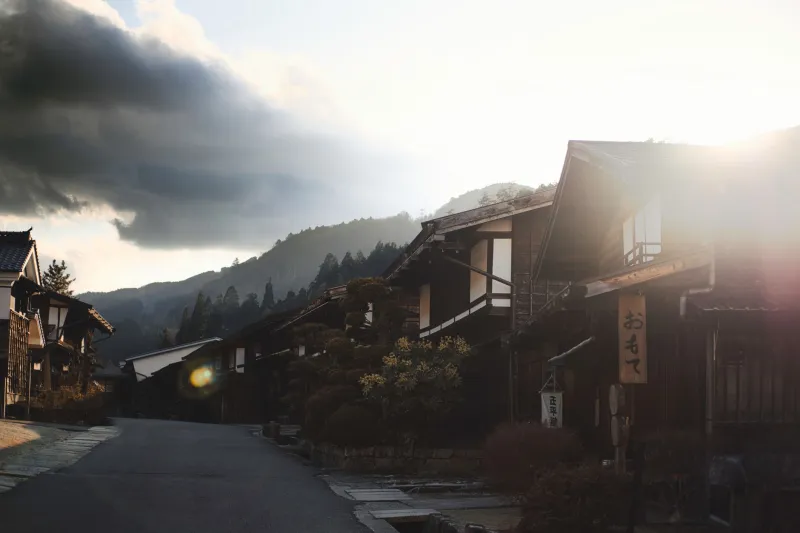
FM Nagano, broadcasting out of the Japanese Alps since the early 1990s, was never trying to be a disruptor. It was trying to serve a community — a mountainous, seasonally isolated region where listeners tuned in not just for music but for connection to their local world. The station's stripped-down production philosophy grew organically out of that mission. You don't need a jingle factory when your audience already trusts you. You don't need to fill every second when your listeners are willing to stay.
Long-form segments became a signature. Hosts were encouraged to develop genuine personalities on air rather than performing a version of radio-DJ energy. Local stories got the same airtime as national trends. It sounds almost quaint described this way — but the listener loyalty numbers FM Nagano built over decades are anything but quaint.
That's what caught the attention of people like Marcus Delray, program director at a mid-sized public radio affiliate in the Pacific Northwest. "I'd been hearing about FM Nagano through music circles for a couple years," he says. "When I actually sat down and listened for a few hours, what hit me was how much I trusted the hosts. Not because they were polished. Because they weren't."
College Stations Are the Early Adopters
Unsurprisingly, the first wave of US stations experimenting with Nagano-influenced programming has been the college radio world. Without commercial pressure and with audiences already predisposed to valuing authenticity over production gloss, campus stations have had the freedom to try things that network affiliates can't easily touch.
At a well-known Midwestern university station, a late-night show called Open Air stripped out all produced transitions for an entire semester as an experiment. Hosts were told to talk like they were talking to a friend, not an audience. Playlists were built around mood and texture rather than format charts. The show's streaming numbers grew 34 percent over that period — modest in absolute terms, but significant for a slot that had been flatlined for years.
"We basically asked: what would FM Nagano do?" the show's student director told us over email. "And the answer was always 'less.' Less noise, less performance, more actual radio."
What Major Networks Are Quietly Watching
It would be an overstatement to say that major US commercial radio networks are overhauling their formats based on a station in the Japanese Alps. But it would also be inaccurate to say nobody's paying attention.
Inside several large broadcast groups, there are conversations happening about what's being called the "authenticity gap" — the growing distance between how radio sounds and how younger listeners actually want to consume audio. Podcasts have eaten into that gap significantly, partly because podcasts feel like people talking rather than productions performing.
FM Nagano sits in an interesting middle space. It's broadcast radio, with all the structure that implies, but it carries an intimacy that most American commercial stations abandoned decades ago in favor of efficiency and consistency. For network programmers trying to figure out why listener loyalty keeps eroding, that's a case study worth examining.
Several program directors we spoke with mentioned FM Nagano specifically when asked about international formats they'd been researching. None were ready to go on record with details — this is still very much an exploratory phase — but the interest is real.
The Authenticity Problem Is an American Problem
Here's the uncomfortable truth that FM Nagano's success surfaces: American radio became very good at sounding like radio, and in doing so, it stopped sounding like people.
The Nagano model inverts that. Hosts aren't coached to hit certain energy levels or avoid dead air at all costs. They're trusted to be themselves, which means sometimes they're a little slow, a little uncertain, a little human. And listeners, it turns out, respond to that. Not despite the imperfection but because of it.
Marcus Delray put it plainly: "We've been optimizing for the wrong things. FM Nagano optimized for trust. We optimized for consistency. And trust won."
For a US radio industry that's been watching its audience slowly migrate to streaming and podcasts, that realization lands with some weight. The answer might not be better technology or more targeted playlists. It might be a mountain radio station in Japan that never tried to be anything other than exactly what it was.
What Comes Next
None of this means American radio is about to start sounding like FM Nagano. The commercial pressures are too different, the formats too entrenched. But the conversation is shifting. More programmers are asking what listeners actually want from radio — not just what they'll tolerate — and the Nagano example keeps coming up as evidence that restraint and authenticity can build something durable.
For fans already tuned in to FM Nagano from thousands of miles away, none of this is surprising. The station's appeal was never a mystery. It just took American broadcasters a while to hear it.