Sister Signals: Inside the College Radio Deals Twining Campuses With a Japanese Mountain Station
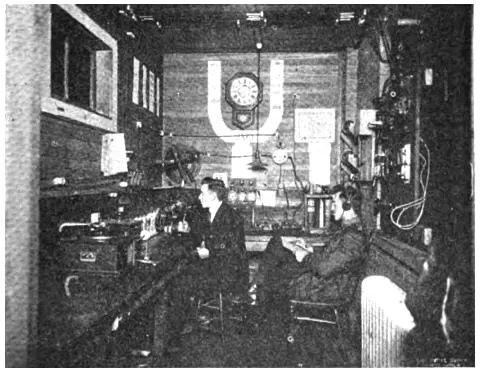
Photo: Uncredited magazine artlcle, Public domain, via Wikimedia Commons
The first formal twinning agreement between an American college radio station and FM Nagano was signed, appropriately enough, over a video call at odd hours — morning in Nagano, the previous afternoon in the Pacific Northwest. The station manager at a small liberal-arts college in Washington state had cold-emailed the Japanese station after his student programmers wouldn't stop playing its replays in the studio.
Eighteen months later, there are at least a half-dozen formal or informal partnerships between US campus and community stations and the Nagano broadcaster, with more reportedly in the works.
How the Twinning Trend Started
The original agreement was modest: a monthly show swap, where each station programs one hour of the other's schedule. The US side would air a curated hour of Nagano programming with English liner notes; Nagano would return the favor with a student-produced showcase of Pacific Northwest indie acts.
It shouldn't have worked. Time zones, language, bureaucracy — every practical reason said no. It worked anyway. Listener response on both sides outpaced expectations, and other stations took notice.
Show Swaps, Simulcasts, and Student Residencies
The partnerships have grown more ambitious. Current arrangements include:
- Monthly simulcasts, where both stations air the same broadcast simultaneously with live chat translation
- Exchange DJ residencies, in which a student programmer curates a weekly segment for the Nagano audience and vice versa
- Joint special events, including a winter solstice broadcast coordinated across both frequencies
For student programmers, the appeal is obvious. College radio has always been a training ground, but the training usually stays local. Twinning with a station in the Japanese Alps turns a campus gig into a genuine international exchange — one that requires research, cultural humility, and the logistical chops to coordinate a broadcast across 16 time zones.
What Each Side Is Learning
US station managers describe it as a masterclass in format discipline. "Their production standards are relentless," one advisor says. "Every transition considered, every ID in place. Our students came back to the studio and started rebuilding our sound the following week."
On the Japanese side, the draw is different: reach. A regional station connecting with American campus radio gets its culture, its artists, and its city heard by listeners it could never otherwise touch. Several Nagano-area indie acts have seen US streaming numbers climb after campus airplay.
More Than a Gimmick
Skeptics initially dismissed the twinning agreements as a novelty — a cute press release with no staying power. The results argue otherwise. Participating stations report stronger student recruitment into their programming boards, new underwriting interest, and, most tellingly, listeners who stick around after the exchange hours end.
There's a longer history here, too. College radio has always thrived on the improbable pairing — the weird signal that shouldn't work but does. Twinning with a mountain station in Nagano is the latest chapter of a very old campus tradition: falling in love with a frequency, and figuring out the rest later.
More twinning announcements are expected in the coming academic year. If your campus station is considering one, the advice from the early adopters is unanimous: email first, sleep later.